Deriving Test Oracles for Verification Infrastructure
July 27: Maria Christakis, TU Wien, Austria
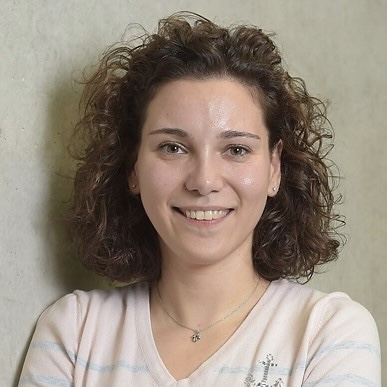
Abstract: Program analyzers and solvers are increasingly trusted as infrastructure for software correctness: they prove safety properties, find bugs, discharge verification conditions, and support automated-reasoning pipelines. Yet these tools are themselves complex software systems. Fully verifying modern analyzers and solvers in the verification stack is rarely realistic, which raises a complementary question: how do we test the tools that verify our programs?
The central obstacle is the oracle problem. For many interesting inputs, we do not know in advance what the tool should report. This talk presents a journey through techniques for deriving such oracles. I will start with specification-based testing of analyzer components, then discuss program generation, differential testing, and metamorphic testing as ways to derive expected results when full specifications or ground truth are unavailable. I will then focus on interrogation testing, which makes testing adaptive by using previous answers to generate follow-up queries and expose contradictions.
I will close by showing how the same oracle-centric view extends beyond analyzers to zero-knowledge systems, secure multiparty computation compilers, and machine-learning models. Across these domains, the goal is to make correctness claims testable by turning the artifacts that systems expose into oracles.
Bio: Maria Christakis is a full professor at TU Wien, where she leads the Software Engineering research unit. Her work focuses on developing innovative techniques and tools for writing, specifying, verifying, analyzing, testing, and debugging software. Her goal is to make programs more robust while enhancing the developer experience.
Before joining TU Wien in 2022, Maria conducted research at the Max Planck Institute for Software Systems (Germany), the University of Kent (UK), Microsoft Research (USA), and ETH Zurich (Switzerland). Since then, she was awarded an ERC Starting grant, WWTF and FWF grants, a Google Research Scholar award, an Amazon Research award, and she was elected member of the Young Academy of the Austrian Academy of Sciences.
Formally Explaining Neural Networks
July 29: Guy Katz, Hebrew University of Jerusalem, Israel
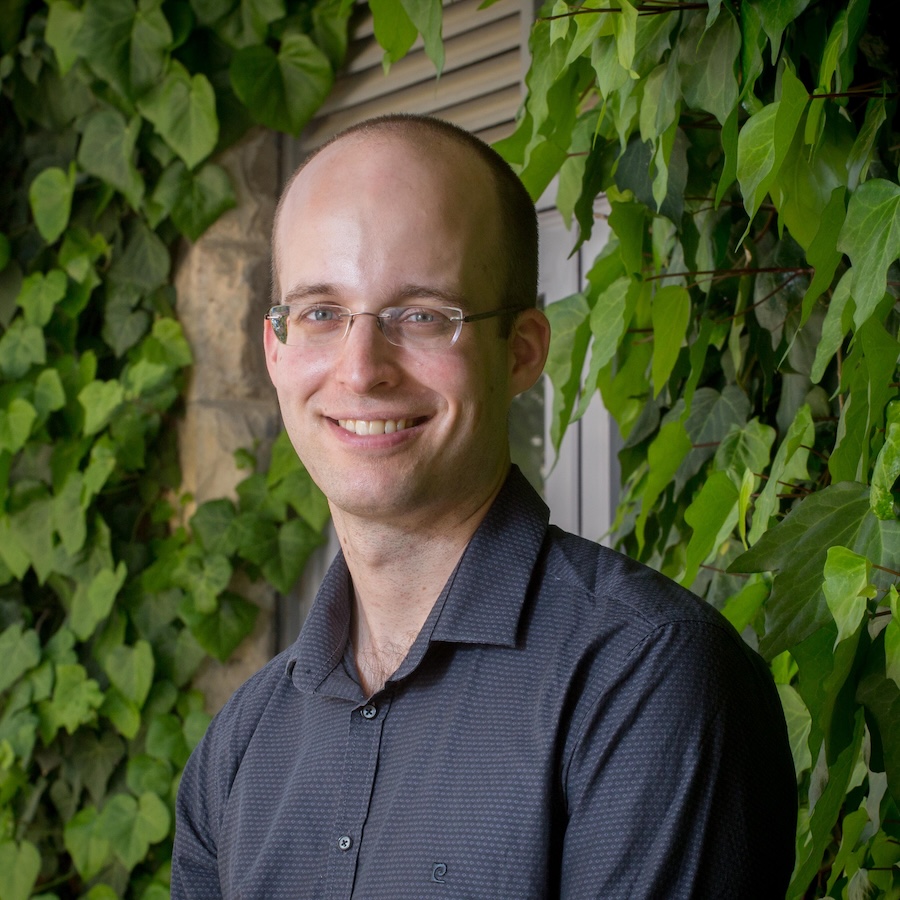
Abstract: Despite the extensive use of deep learning across critical domains, neural networks remain vulnerable “black boxes” whose heuristic explainability (XAI) frameworks lack rigorous guarantees. To establish stronger reliability for high-stakes stakeholders and regulators, this talk will focus on the framework of Formal Explainability, demonstrating how deep neural network (DNN) verification can be leveraged to compute provable, abduction-based explanations. We will address the primary bottleneck of scalability by exploring three cutting-edge methodologies designed to accelerate the extraction of minimal sufficient explanations: an incremental enumeration approach for multi-step reactive systems (such as autonomous robotic agents), an abstraction-refinement framework that dynamically tunes network size to eliminate spurious counterexamples faster, and a parallelizable simultaneous feature-freeing method that reformulates bound propagation into a multidimensional knapsack problem. Finally, we will highlight some upcoming research directions in trustworthy AI, including formal mechanistic interpretability for automated circuit discovery and the certified approximation of exact Shapley values.
Bio: Guy Katz is a Professor of Computer Science at the Hebrew University of Jerusalem, Israel. He earned his Ph.D. from the Weizmann Institute of Science in 2015. His research bridges the gap between Formal Methods and Software Engineering, with a specific focus on applying formal verification to systems incorporating neural networks and Large Language Models (LLMs). Prof. Katz is a recipient of the Krill Prize (2021), the CAV Award (2024), and the ETAPS Rance Cleaveland Test-of-Time Tool Award (2026), and his work is supported by an ERC grant.